Sunday, April 1, 2007

What We are Doing Now...Maui Energy Group!

Business Model / Plan in Progress:

Maui Energy Group Represents the Development of Alternative Fueled Vehicle Technologies, Transportation Systems, Energy Power Storage and Management Services in Hawaii, included but not limited to All-Electric, Electric Hybrid, Electric Plug-in Hybrid, Bio-Fuel, Hydrogen, Solar Assisted and Compressed Air Vehicles; to expand existing Technologies and assist in the development of new ones. Our goal is to reduce our dependence on Fossil Fuel, reduce Air Pollutions and Toxin’s, and develop a World Class Showcase for these Alternative Fueled Vehicles in our Hawaiian Environment.

Transportation contributes to global warming through the burning of gasoline and diesel fuel. Any process that burns fossil fuel releases carbon dioxide, a greenhouse gas, into the air. Based on global warming potential, carbon dioxide accounts for over 80 percent of total greenhouse gas emissions in the United States. In 2004, transportation sources accounted for approximately one quarter of total U.S. greenhouse gases emissions.

In contrast with trends in other air emissions, greenhouse gas emissions from transportation continue to rise, in large part because travel growth has outpaced improvements in Vehicle Energy Efficiency.

Increasingly expensive oil and global warming are causing an energy revolution by requiring oil to be supplemented by alternative energy sources and by requiring changes in our lifestyle. These Requirements of change allow us an opportunity to set an example for the World to see now…The attention generated in Hawaii will allow us to attract better Technology Funded by Federal Grants, Venture Capitalist, Venture Funds, and Private Capital for Future Development. Our successful Comfort Ruling will allow us to raise these funds for our Company’s business development in Hawaii.

Energy Web Site & Blogs:
Hawaii Alternative Energy Groups:

Our Web Site will focus on all Hawaiian Companies that are developing and working with Alternative Energy Concepts.

Our Alternative Energy Blog is a place where all topics relating to The Hawaii Energy Revolution are presented in a forum for basis discussion. We hope that our web site will be a useful reference for those who wish to find information about The Hawaii Energy Revolution.

http://www.mauienergygroup.com

A forum for the people of Hawaii, as well as those from around the World to see and hear of the progress of Hawaii to become a world leader in Alternative Energy Development in our unique Island Life Styles.

Maui Energy Group is committed to this development in Hawaii, working closely with Manufacturers from around the World to bring and develop these Alternative Energy Programs as a Model for Our Future Energy Independence.

These Companies are interested in working closely with us for Research and Development purposes including but not limited to everyday use trials, data acquisition / analysis, further development and standardization, maintenance and service, and the development of an infra-structure for our Electric Car Rapid Charging Stations located for convenient use around the Island of Maui.

Of particular interest is the challenge of advancing the electric car market by incorporating our new technologies, which will maximize the consumer appeal and acceptance of these in our every day lifestyle.

Our goal in the feasibility study phase has been to provide a comprehensive analysis to support Maui Energy Group in the process of commercializing our new Alternative Energy Transportation Concepts.

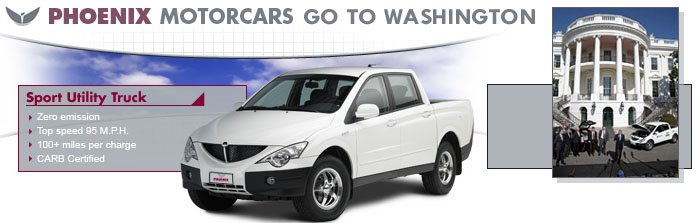
Two of the most promising Companies are Phoenix Motor Cars and Altairnano Technologies. Our co-development agreements allow us the opportunity to bring this exciting revolutionary technology to Hawaii.

We have two NanoSafe battery packs, a 35 KWh and 70 KWh Pack, that can be recharged in less than 10 minutes using our new industrial 480 volt battery charging platform. The NanoSafe battery packs can also be charged over longer periods of time when using typical 120 or 240 volt power sources. Our on-board charger system is standard equipment for both the Phoenix SUT and SUV Vehicles. We are working on a Thin Film Solar Rap for 100% Clean Energy trickle-charging while You are at work!


"The Nanomaterials Altair has developed are the next generation of electrode materials for lithium-ion batteries and Altair's research and product development is laying the ground work for a new generation of ultra high power lithium ion batteries,"( 250 Mile range ), commented Altair’s Dr. K. M. Abraham. "A key requirement to the above applications is the ability to recharge the battery very quickly, for example in a few ( under 10) minutes. Current Li-Ion batteries are incapable of such quick charge times because of the chemistry of the anode materials. Altair has found a solution to this with their nano-sized lithium titanium oxide." (nano-titanate)

"Altair's nanomaterials, which have a virtually zero strain crystal lattice, eliminate the main cause for battery electrode material fatigue, which limits rechargeable battery life, increasing the number of recharge and discharge cycles from a few hundred to many thousand cycles,"(12,000), said Dr. Vassilis G. Keramidas. "I find Altair's development strategy and proposed research direction sound and a necessary step in establishing the Li-Ion electrochemistry as a viable contender for large battery applications."

"Our research in battery electrode materials is a further indication of how Altair's scientists are able to apply their Nanomaterials science knowledge to solving real world needs," commented Altair CEO Dr. Alan J. Gotcher. "Many of the technology and product development initiatives that we have been working on for the last few years are now ready for the commercialization stage. Each step is another validation of our business strategy and product technology platform. Altair's Nano material based, micro porous electrode technology has performance and stability advantages that appear to be unmatched when compared to the best commercialized technology in the market today."

Daniel J. Elliott, President & CEO of Phoenix Motorcars, met with President Bush on Friday, February 23, 2007 at 10:00am in the Oval Office in The White House. The Phoenix Motorcar SUT was showcased on the south lawn of The White House. We had a follow up meeting with Secretary of Energy Samuel Bogman and his staff on April 10, 2007, It was Electrifying ...we had a third follow-up meeting May 2, 3rd...we are moving forward!

Video available on:

http://www.mauienergygroup.com http://mauienergygroup.blogspot.com

We are working with Secretary of Energy Samuel W. Bodman for New Energy Grants for Advanced Battery Power Storage Development, geared toward our new Technologies. We will do co-development with Phoenix, Altairnano, and Maui Energy Group together in Hawaii.

Let the Magic began...

ZYTEK Electric Smart Car...

Just Imagine...It's Easy...It's Fun...It's What You Always Dreamed of...


Our Front Wheel Drive... All-Electric New E-Smart Car...


ZYTEK…Maui Energy Group All-Electric E-Smart Car:


We are working with Zytek, from the UK, on bringing and co-developing their Electric Smart Cars in Hawaii with our unique life style.

Our Goal is to bring Zytek, Altairnano, together here in Hawaii and develop this new Electric Smart Car, Sponsored by Maui Energy Group.

(E-Smart Car)


Just Imagine: Our Electric E-Smart Cars being used on the Hana Highway, zero emissions, no noise, just good music, and the wind in your hair. No pollutions, an Example to the World of what we can do Now!

New Rapid Charging Platform 480 Volt System...


Rapid Charging Stations / Platforms:

We are working with Electric Transportation Engineering Corporation (eTec), PosiCharge, Phoenix Motor Cars, Altairnano, Hawaiian Electric Industries, HOKU, and other Hawaii Companies to develop Electric Charging Stations (6-10+) strategically placed around Maui, the first of their kind. (480 Volt Rapid Charging Stations at several hundred amps will be required, transferring 210 kW/h of energy to the battery pack; will be conveniently located for Fleet and Consumer use with a built in Smart Managment & Credit Card System with new management software for technological evaluation and a model for other communities to follow).


Outlined locations on Map:

Kapalua and Kahului will be the first two locations.

Kahului, Wailuku, Hana, Pa’ia, Ma’alaea Harbor, Pukalani, Wailea, Kihei, Lahaina, Kaanapali, Kapalua.

Cost: $4-$5 for 130 miles...

Maui Energy Group Agreement:


Maui Energy Group L.L.C.

We have agreements with Phoenix Motorcars / Pristine International for Research in Hawaii for the Development of our Technologies including the development of our Rapid Charging Stations on Maui, then all of Hawaii. We are Co-developing the Rapid Charging Stations with Etec, PosiCharge (Aerovironment), and Maui Electric.

We have ordered both the Sport Utility Trucks (SUT's) and Sport Utility Vehicles (SUV's) for delivery to Hawaii in August of this year (2008). These are Test Vehicles for Fleet Partners and The DOE...Call Marty at 808-661-1212 for assistance...

Our initial Focus is on Hawaii Fleet Sales to the State of Hawaii, Maui County, Hawaii Electric, Maui Electric, and Corporate Fleets in Hawaii. We expect to introduce the first vehicles to Castle & Cooke on Lanai through its subsidiary, Lanai Sustainability Research LLC for their new Solar Photovoltaic Farm to be finished in June 2008. The Lanai Solar Photovoltaic Farm will be the 4th largest in the United States, and the largest in Hawaii.

This will be one of the first 100% zero emission, zero carbon footprints of our business model that allows us to use the Sun to Power our all-electric vehicles without using any fossil fuels in the process. We will have a test vehicle available in 60-90 days on Maui for our clients to experience what Real All-Electric Freeway Vehicles can do today...


In 2009 we will address the Consumer Market...Reserve Yours Now!


For the Beaches of Maui, of Hawaii, & Our Children...Our Future...Mahalo Nui Loa

Vehicle-to-Smart Grid Power: Resources for Distributed Electric Power in Hawaii

Aloha from Maui:

This is the V2G Smart Grid Energy Peak-Power Management System we are bringing to Maui!


All-Electric-drive
vehicles can become an important resource for the Hawaii electric utility system, with consequent air pollution, system reliability, and economic benefits. We refer to electric power resources from vehicles as "Vehicle to Grid" power (V2G). The economic value of some forms of V2G appear high, more than enough to offset the initially higher costs of electric-drive vehicles, thus having the potential to accelerate their introduction. To realize this potential, some coordination of vehicle and infrastructure planning will be needed.

Our Smart Home Management (SHMM) Model:


Our Phoenix Motorcars 35 KWh Battery Platform can run your home in an emergency for
3-4 days... 3-4 homes for 24 hours, our new advanced 70KWh Platform.....Just Imagine!


Major automakers and the Department of Energy are pouring money into research on plug-in hybrid / all-electric-vehicles. These cars promise to cut petroleum consumption by allowing commuters to drive to work using primarily electricity--stored on board in batteries--rather than gas. Although critics have warned that the vehicles could put too much pressure on an already strained electrical grid, experts are now arguing that rather than being a strain on the grid, all-electric & plug-in hybrids may actually help prevent brownouts, cut the cost of electricity, and increase the use of Renewable Energy.

The concern is that plug-ins and all-electric vehicles are not a good way to reduce gasoline consumption, because if they become popular, and millions of car owners recharged their cars at three in the afternoon on a hot day, it would Crash-the-Grid. But these vehicles could actually help stabilize the Smart Grid if owners charged their cars at times of low demand, and if the vehicles could return Excess Energy to the Smart Grid when it's needed--say while parked in the company lot at work during peak demand. We have a New Solar Thin-Film -Coating which will allow our Vehicles to be Trickle-Charged in the Sun while in the parking lot at work.


Since Utilities have built enough Power Plants to provide electricity when people are operating their air conditioners at full blast, they have excess generating capacity during off-peak hours. As a result, according to an upcoming report from the Pacific Northwestern National Laboratory (PNNL), a Department of Energy lab, there is enough excess generating capacity during the night and morning to allow more than 80 percent of today's vehicles to make the average daily commute solely using this electricity. If plug-in-hybrid or all-electric-car owners charge their vehicles at these times, the power needed for about 180 million cars could be provided simply by running these plants at full capacity.

This will be a boon to utilities, because they'd be able to sell more power without the added cost of building more plants. Ideally, this will translate into lower electricity prices, says Robert Pratt, a scientist at PNNL. It might also help utilities justify the added capital costs of building cleaner coal-burning / bio-diesel plants, because they'll be able to recover their investment faster by "selling more electricity with the same set of iron, steel, and concrete," Pratt says.

Such a system could be further optimized by using our smart chargers, software, and advanced electronics. This system would include our smart charger that runs on a timer, charging cars only during off-peak hours. Researchers at PNNL are taking this a step further with smart chargers that use the Internet to gather information about electricity demand. Utilities could then temporarily turn off chargers in thousands of homes or businesses to keep the grid from crashing after a spike in demand.


The next step would be to add smart meters that would track electricity use in real time and allow utilities to charge more for power used during times of peak demand, and less at off-peak hours. Coupled with such a system, our Altairnano Consumer Smart Charger could ensure that the plug-in batteries are charged only when the electricity is at its cheapest, saving consumers money. PG&E of Northern California has Projected that a Consumer can Profit $3,000=$5,000 a Year with their signing up for their Peak Power Management Charging Programs now being developed.
Experts are excited about our concept called "Vehicle-to-Smart Grid," often abbreviated V2G. In such a system, all-electric and plug-in hybrids, rather than being merely an extra burden to the grid, become a much needed way for grid managers to balance the amount of energy generated at any given time to match the amount of energy being consumed. Millions of cars, each with several kilowatt hours of storage capacity, (ours have 35 KWh) would act as an enormous buffer, taking on charge when the system temporarily generates too much power, and giving it back when there are short peaks in demand.

In a V2G system, the batteries of our fleet of all-electric vehicles plus plug-ins would be used as a buffer to even out supply and demand and to help keep the grid stable, we have developed technology that could help make such a system work. In this kind of system, each vehicle would have its own IP address so that wherever it is plugged in, the cost of the energy it uses to recharge would be billed to the owner. With the right equipment, the car could also return energy to the grid, giving the owner credit. Mock-ups of such systems have already been tested by the National Renewable Energy Laboratory (NREL), in Golden, CO, and by a company called AC Propulsion, based in San Dimas, CA.

On Monday, April 9, the Silicon Valley Leadership Group and Advanced Micro Devices, Inc. (NYSE:AMD) hosted U.S. Senator Barbara Boxer (D-CA) and executives from major high tech companies to discuss the vital role Silicon Valley companies play in developing alternative energy and energy efficient solutions for the future of California and the nation. The Senator chairs the Environment and Public Works Committee. Pacific Gas & Electric (PG&E) demoed the first utility Vehicle-to-Grid (V2G) electric car. Using a standard home meter and a plug-in electric vehicle, PG&E showcased how its customers could charge their electric vehicles at night and gain credit on their electricity bill by plugging in during the day, while simultaneously providing renewable energy to the power grid during peak hours. PG&E of has Projected that a Consumer can Profit $3,000=$4,000 a Year with their signing up for their Peak Power Management Charging Programs now being developed. The new stay-at-home make a Buck...This could be You someday...2010!

Participants had the opportunity to test ride a Plug-In Hybrid Electric Vehicle, which gets more than 100 miles per gallon...

Utilities can start building new business models based on the distributed energy storage system they've always wanted. V2G will turn intermittent night-time wind power into a reliable 24-hour energy source. It will "valley fill" and "peak shave" utility load curves (and by enabling more efficient use of generating plants, we might all get lower monthly bills). And it will bring a revenue stream back to plug-in car owners who allow the utilities to tap their batteries for spinning reserves and regulation services. All the technologies needed to make this happen already exist.

PG&E has ordered 4 Phoenix Test All-Electric Vehicles with a back-up order of 400 Vehicles for April 2008 delivery...Just Use Your "Imagination on Wheels"....

All-electric vehicles will also serve as backup sources of power. In extreme cases, such as a blackout from an Earth Quake, (Last Year in Hawaii) the cars could keep essential systems up and running in our homes and businesses in an Emergency...

The challenge of using a renewable source such as wind is that wind is intermittent, varying day by day and minute by minute. A network of all-electric plus plug-in hybrids could smooth out these fluctuations by storing extra energy and sending it to the grid when the wind dies down. Such a network would also improve the economics of wind power by making it possible to capture more of the excess power generated on windy days, says Willett Kempton, senior policy scientist in the Center for Energy and Environmental Policy at the University of Delaware. Our new (in development stage) high density energy storage units with Altairnano can absorb electricity on an efficiency basis of 92% vs 20% as the Kaheawa Wind Farm is now set up.

Hawaii's Energy Position / Future...Nation's Highest Energy Cost...If We Can Get It!

This is How The Greenhouse Effects Hawaii...This We Know!


Sea level rise could lead to flooding of low-lying property, loss of coastal wetlands, erosion of beaches, saltwater contamination of drinking water, and decreased longevity of low-lying roads, causeways, and bridges. In addition, sea level rise could increase the vulnerability of coastal areas to storms and associated flooding.

The 1,000-mile tidally influenced shorelines of the Hawaiian would be distroyed.


The Future Sea Level at Honolulu...Honolulu International Airport Underwater...


At Honolulu, Nawiliwili, and Hilo, sea level already is rising by 6-14 inches per century, and it is likely to rise another 17-25 inches by 2100. Possible responses to sea level rise include building walls to hold back the sea, allowing the sea to advance and adapting to it, and raising the land (e.g., by replenishing beach sand, elevating houses and infrastructure).


Hawaii has the Highest Energy Cost in the Nation. What do we do Now?

What is our Future in Hawaii...You can make a Difference Today...


Hawaii's Future: Energy Independence...Need We Say More?

Supreme Court Ruling: A Victory for a World whose Environment seems increasingly threatened by Climate Change.


April 3, 2007
Editorial
The Court Rules on Warming

It would be hard to overstate the importance of yesterday’s ruling by the Supreme Court that the federal government has the authority to regulate the carbon dioxide and other greenhouse gases produced by motor vehicles.

It is a victory for a world whose environment seems increasingly threatened by climate change. It is a vindication for states like California that chose not to wait for the federal government and acted to limit emissions that contribute to global warming. And it should feed the growing momentum on Capitol Hill for mandatory limits on carbon dioxide, the principal greenhouse gas.

The 5-to-4 ruling was a rebuke to the Bush administration and its passive approach to the warming threat. The ruling does not require the government to regulate greenhouse gases. But it instructs the Environmental Protection Agency to reconsider its refusal to regulate emissions, urges it to pay attention to the scientific evidence and says that if it takes the same stance, it has to come up with better reasons than its current “laundry list” of excuses.

The ruling also demolishes President Bush’s main justification for not acting — his argument that because the Clean Air Act does not specifically mention greenhouse gases, the executive branch has no authority to regulate them. The president has cited other reasons for not acting, including costs. But his narrow reading of the Clean Air Act has always been his ace in the hole.

The court offered a much more “capacious” reading of the act, as Justice John Paul Stevens wrote for the majority. The plaintiffs — 12 states and 13 environmental groups — had argued, and the court agreed, that while the act does not specifically mention greenhouse gases, it gives the federal government clear jurisdiction over “any air pollutant” that may reasonably be anticipated to endanger “public health or welfare.” This interpretation was first set forth by Carol Browner, administrator of the E.P.A. under President Clinton, and remained agency policy until Mr. Bush reversed it in 2001.

The administration had also argued that the states did not have standing to sue on this issue because they could not show that they would be harmed by the government’s failure to regulate greenhouse gases. The court ruled that the states have a strong and legitimate interest in protecting their land and their citizens against the dangers of climate change and thus have standing to sue.

The ruling reinforces state efforts in other ways. California and nearly a dozen other states have adopted their own regulations requiring lower greenhouse gas emissions from cars and trucks. These rules, however, require federal approval, which seemed unlikely as long as the agency could claim that carbon dioxide was not a pollutant — a claim it can no longer make.

The E.P.A. had also argued that reducing emissions would require it to tighten fuel efficiency standards, a job assigned by law to the Department of Transportation. The automakers have made much the same argument against California’s emissions rules. But the court said that the E.P.A. could not shirk its responsibilities just because another department sets mileage standards. The agency is clearly in for some serious soul-searching.

The Supreme Court, for the first time, has said that global warming is a real and present danger. This can only encourage those on Capitol Hill and in the states who are growing increasingly impatient for aggressive action.

This supports California's CARB Mandated ZEV Emission Credits.

Let's watch for the EPA's New Action Plan!